Discovery
Better care begins with better questions.
Clinical research is most valuable when it begins where medicine begins: with patients.
Every unanswered question encountered in clinical practice is an opportunity to improve how diseases are understood, diagnosed, treated, or prevented. The purpose of research is not simply to generate publications, but to produce knowledge that improves patient care.
That principle guides my research.
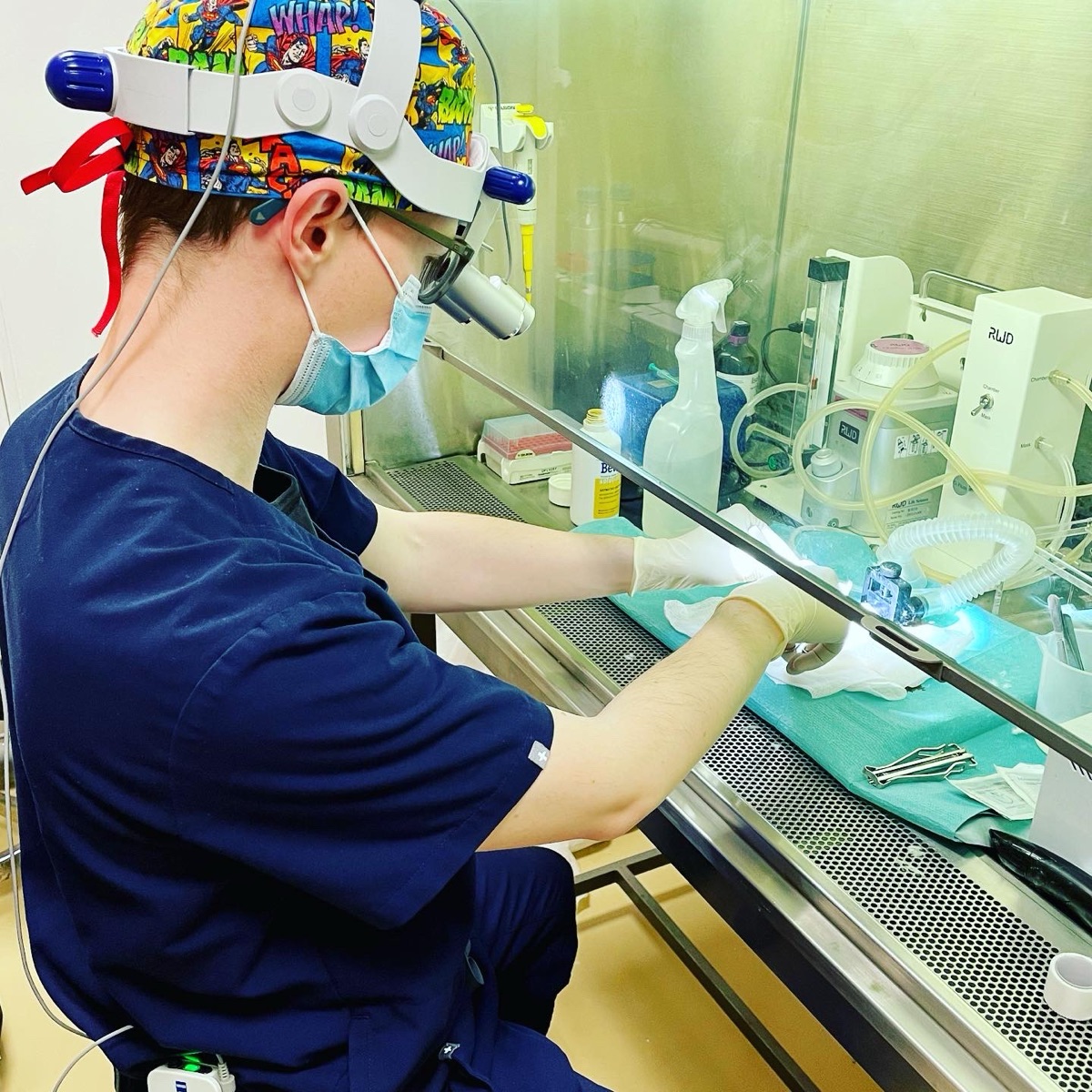
In practice, that work has returned to a few recurring themes. They are aortic disease, the measurement of surgical quality and outcomes, and the translational and computational research that connects the laboratory to the operating room.
Questions worth asking
Meaningful research begins by identifying problems that matter.
Some questions arise from unexpected clinical observations. Others emerge from limitations in existing evidence or opportunities created by new technologies.
Regardless of their origin, the most important questions are those whose answers have the potential to change clinical practice and improve patient outcomes.
Evidence that matters
Not every publication changes medicine.
The objective is evidence that is methodologically rigorous, clinically relevant, and capable of informing better decisions.
Whether through clinical studies, evidence synthesis, translational investigations, or collaborative projects, the goal remains the same: generating knowledge that physicians can use with confidence.
Science is collaborative
Progress in medicine is a collective achievement.
Every meaningful discovery reflects collaboration among clinicians, scientists, engineers, statisticians, trainees, and institutions working toward a common objective.
Research advances most effectively when different perspectives converge around questions that matter.
From question to patient
Every project follows the same journey.
- Clinical Observation
- Question
- Investigation
- Evidence
- Implementation
- Better Patient Care
This cycle represents how I approach research: beginning with clinical questions and returning to the bedside with better evidence.
Selected Contributions
The following publications represent different aspects of this philosophy.
Rather than a complete publication list, they illustrate how research contributes to better clinical decisions.
Physiology-guided coronary artery bypass grafting in valve surgery
The Lancet, 2026
Clinical decisions become stronger when they are informed by physiology rather than anatomy alone. This perspective emphasizes individualized surgical decision-making rather than routine practice.
Operating Room Extubation in Major Aortic Surgery
Journal of Cardiothoracic and Vascular Anesthesia, 2026
Demonstrating how thoughtful changes in perioperative care can improve recovery after complex aortic surgery and translate evidence into better patient outcomes.
Transcriptomic Analysis Exploring the Role of Aquaporins in Thoracic Aortic Aneurysm
Annals of Thoracic Surgery, 2026
Connecting molecular biology with clinically relevant mechanisms of thoracic aortic disease to better understand why disease develops and how future therapies may emerge.
Optimizing Risk Prediction: Comparative Study of Surgical Outcome Risk Tool Versions 1 and 2 in Aortic Surgery
Journal of Cardiothoracic and Vascular Anesthesia, 2026
Evaluating clinical risk prediction tools that support surgeons in making more accurate and individualized treatment decisions.
A Statewide Quality Initiative to Promote Aortic Annular Enlargement
Annals of Thoracic Surgery, 2026
Showing how collaborative quality initiatives can accelerate the adoption of better surgical practice across institutions rather than within a single center.
From Transcriptomic Datasets to Translational Insight: A Practical Guide to Bioinformatics for Cardiothoracic Surgeons
Annals of Thoracic Surgery Short Reports, 2026
Providing surgeons with practical methods to transform complex biological datasets into clinically meaningful research questions and translational insight.
Continue
Every new discovery creates new possibilities for improving patient care. The next gallery explores how innovation can responsibly help transform knowledge into better decisions.